ADZ
Rua do Crucifixo 28, First Floor, Lisboa
Wednesday–Saturday 12–5pm
info@adz.gallery
+351 932 989 202
Justin de Verteuil
If not Dread Delight
Opening reception Thursday, 11 September, 6–8 pm
9 Cork Street, London, W1S3LL
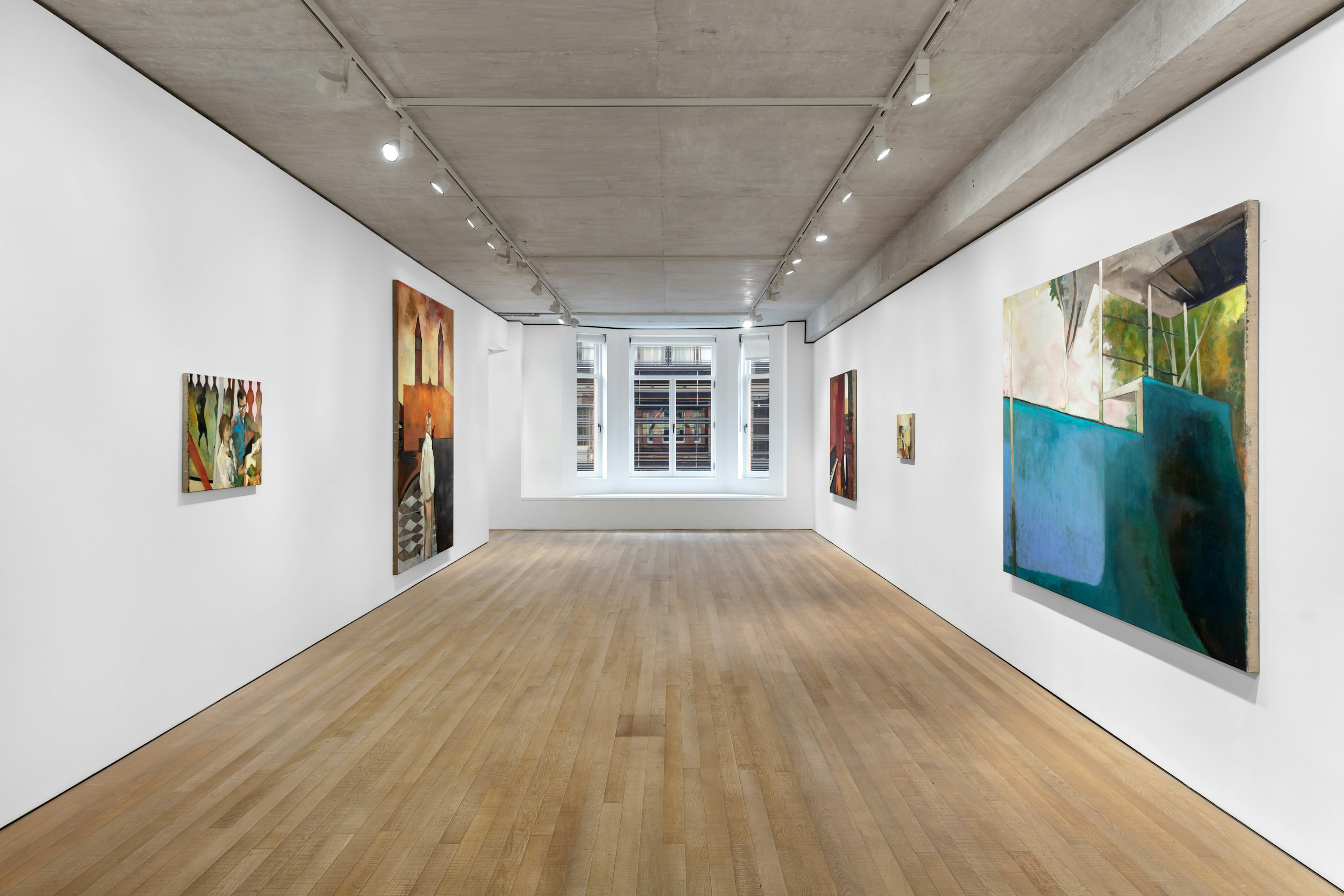
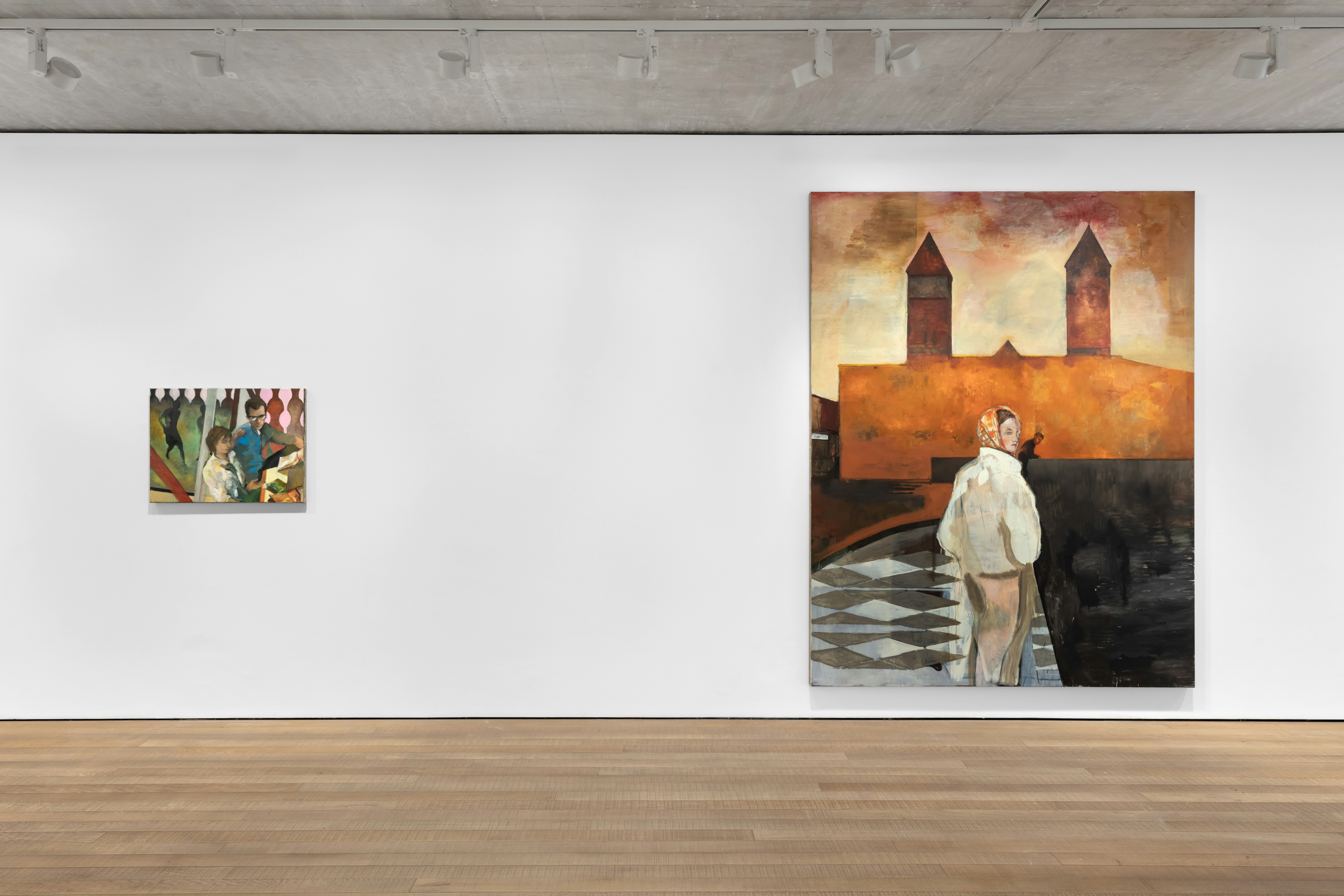
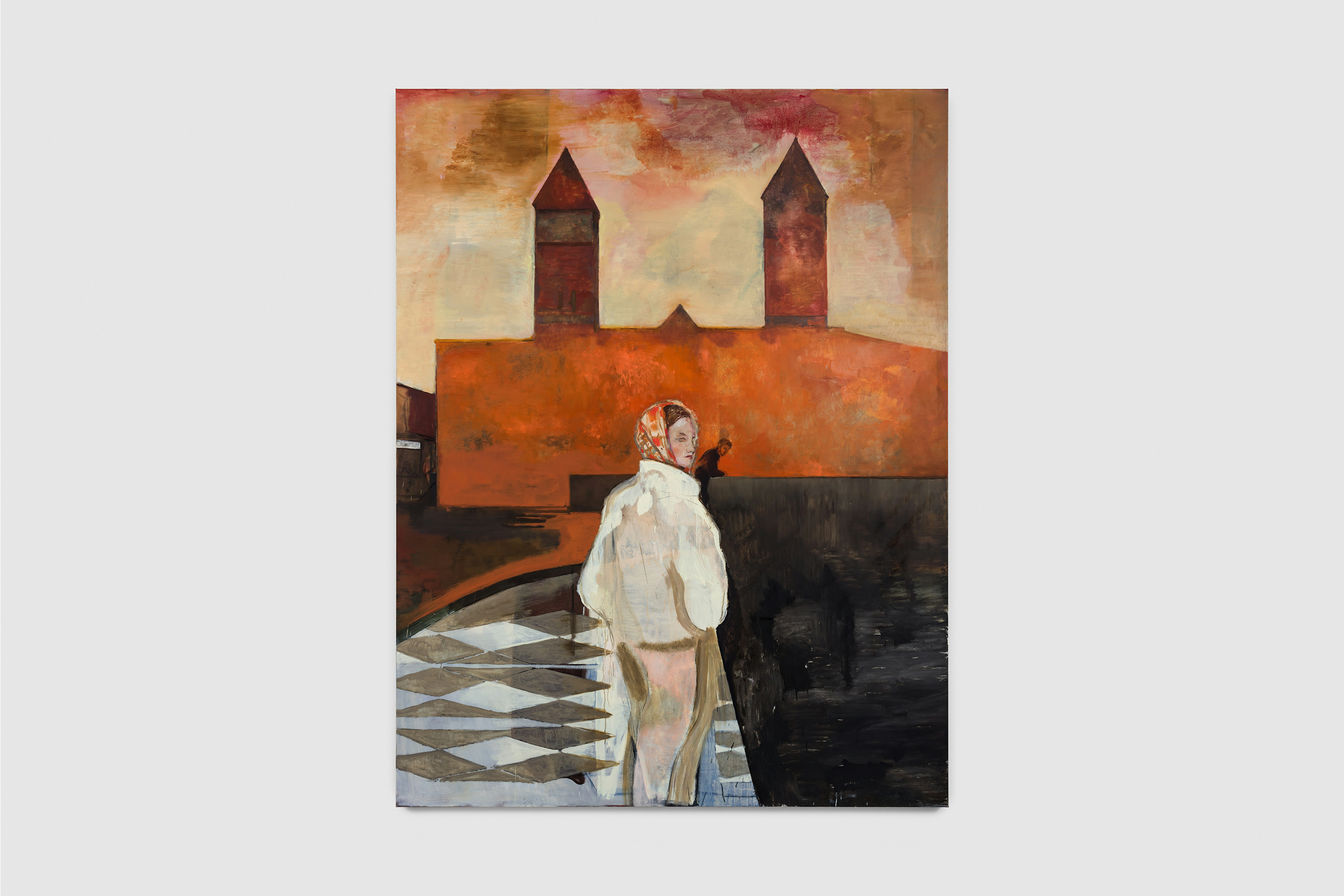
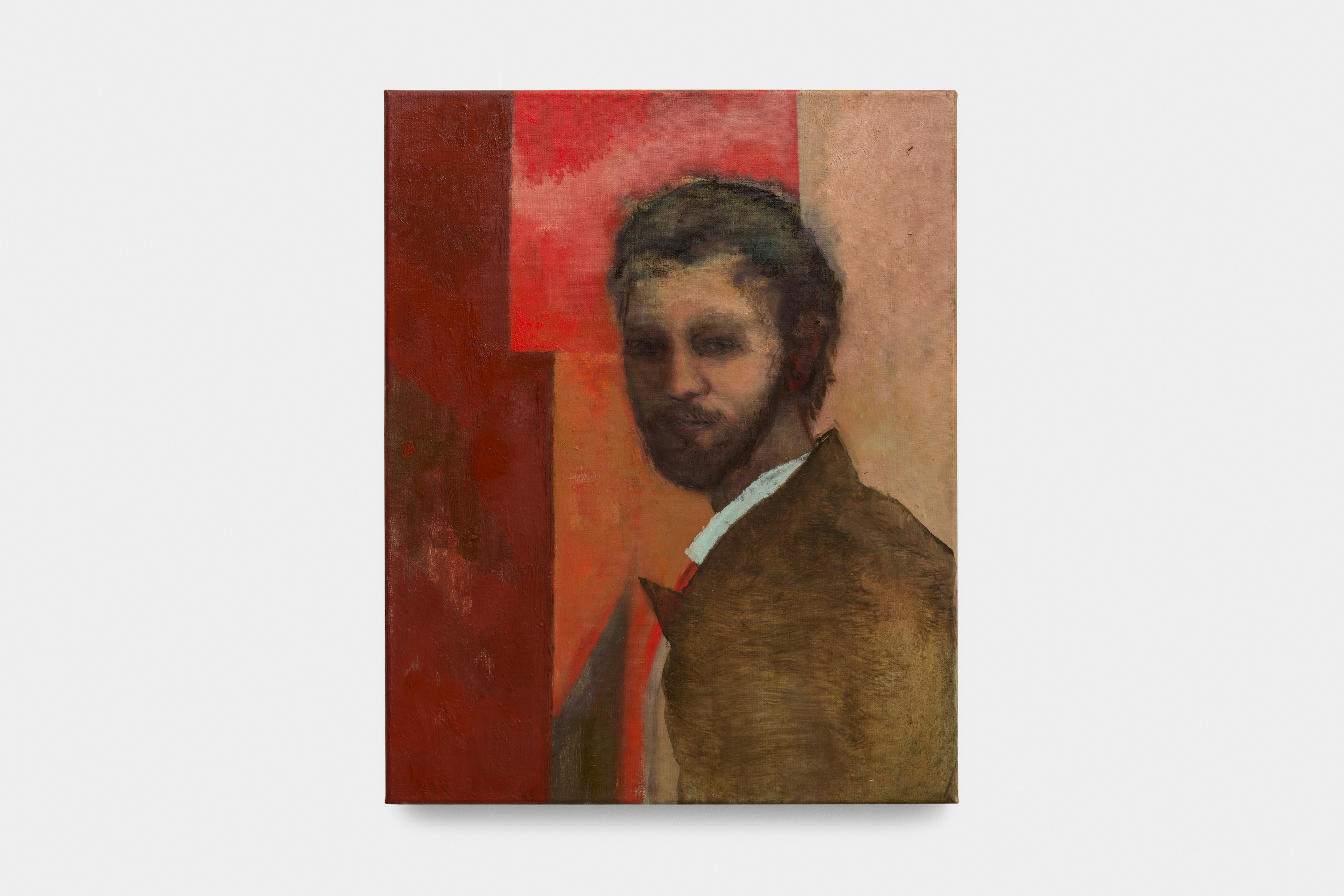
Memory is a fragile, slippery thing. A construct rarely, if ever, to be completely trusted. A furtive glance with a brief flicker of recognition; a step toward feelings unspoken; feelings yet unknown. In ‘If Not Dread Delight’, Justin de Verteuil’s paintings navigate these occurrences and sentiments quietly yet assertively: between what we feel we know, and what we are yet to learn about ourselves and about the people we love.
We speak to each other on the phone in the middle of a hot summer, me in London, him in his studio in Düsseldorf, as we navigate missed calls and failed digital connections. We discussed the importance of place in his practice: his move from the Caribbean to Europe was one of discovery, marked by making another geography feel like home. De Verteuil moved to Düsseldorf in 2014 to study at the city’s Kunstakademie under the tutelage of artists such as Peter Doig, Siegfried Anzinger, and Katherina Wulff. This is important for both de Verteuil and understanding his paintings, as while the works aren’t strictly autobiographical, the figures in his paintings are created from what he has seen, what has occurred, what has come to pass. They are composite renderings of a life born of transition, constructing different formulations of what a home could be.
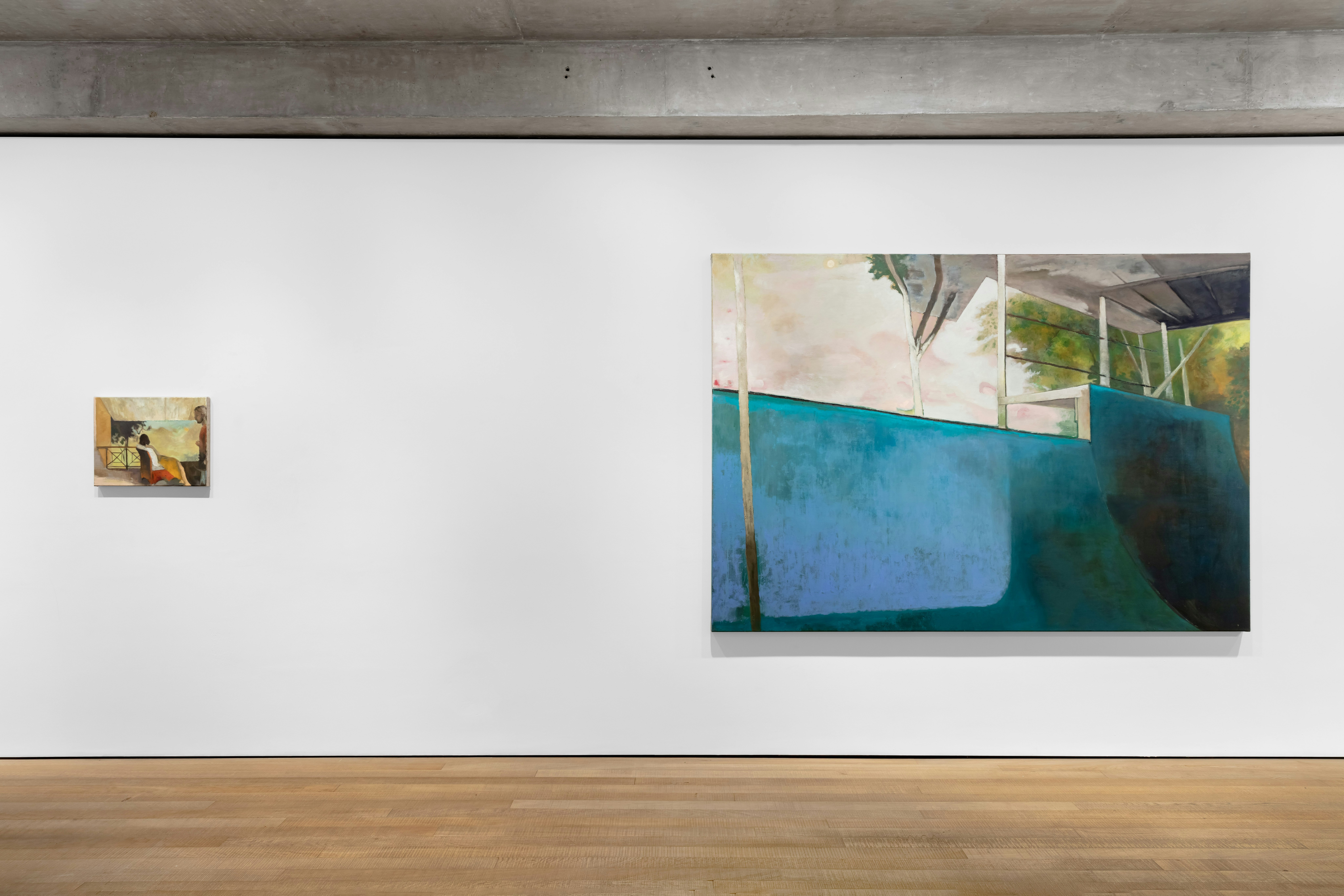
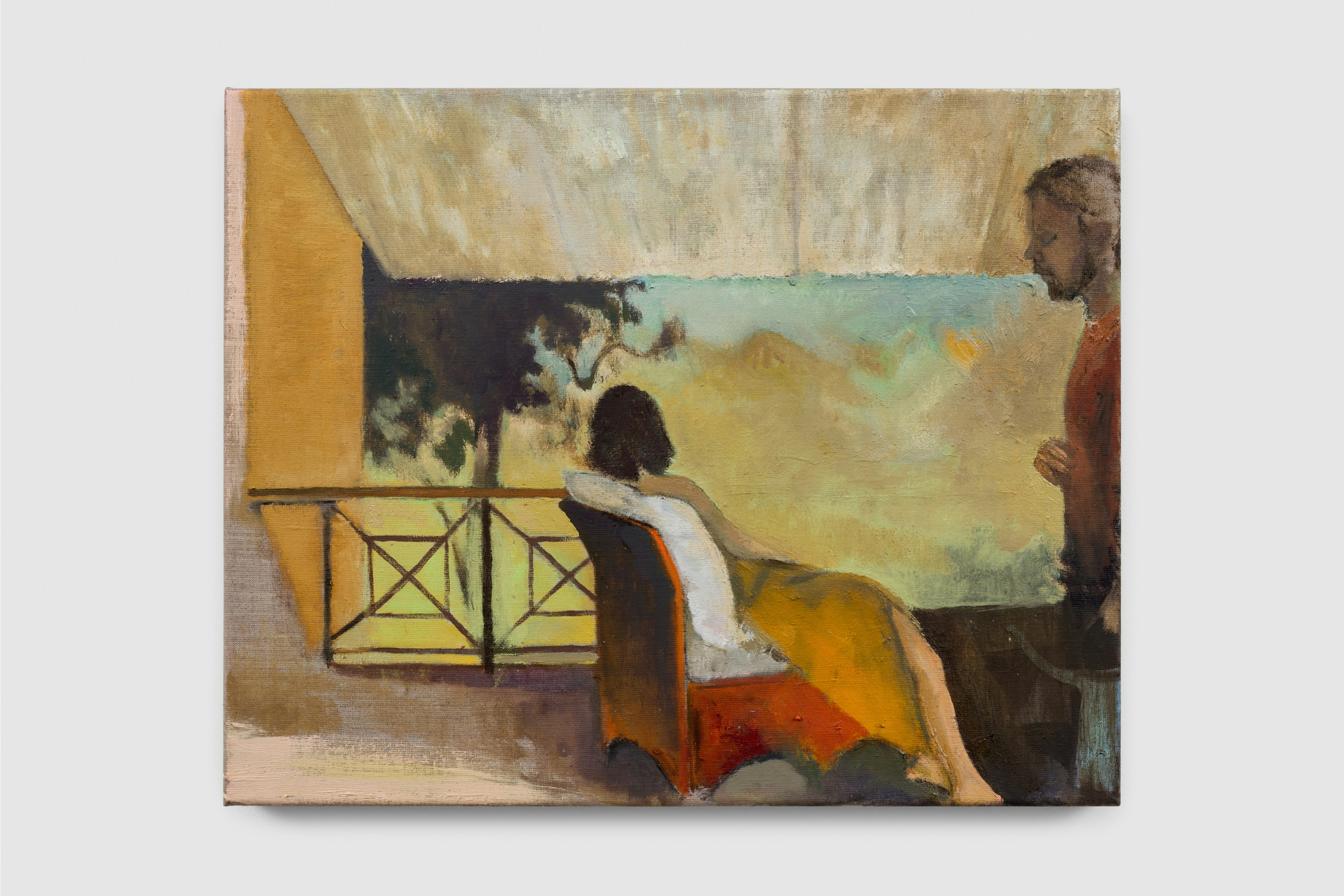
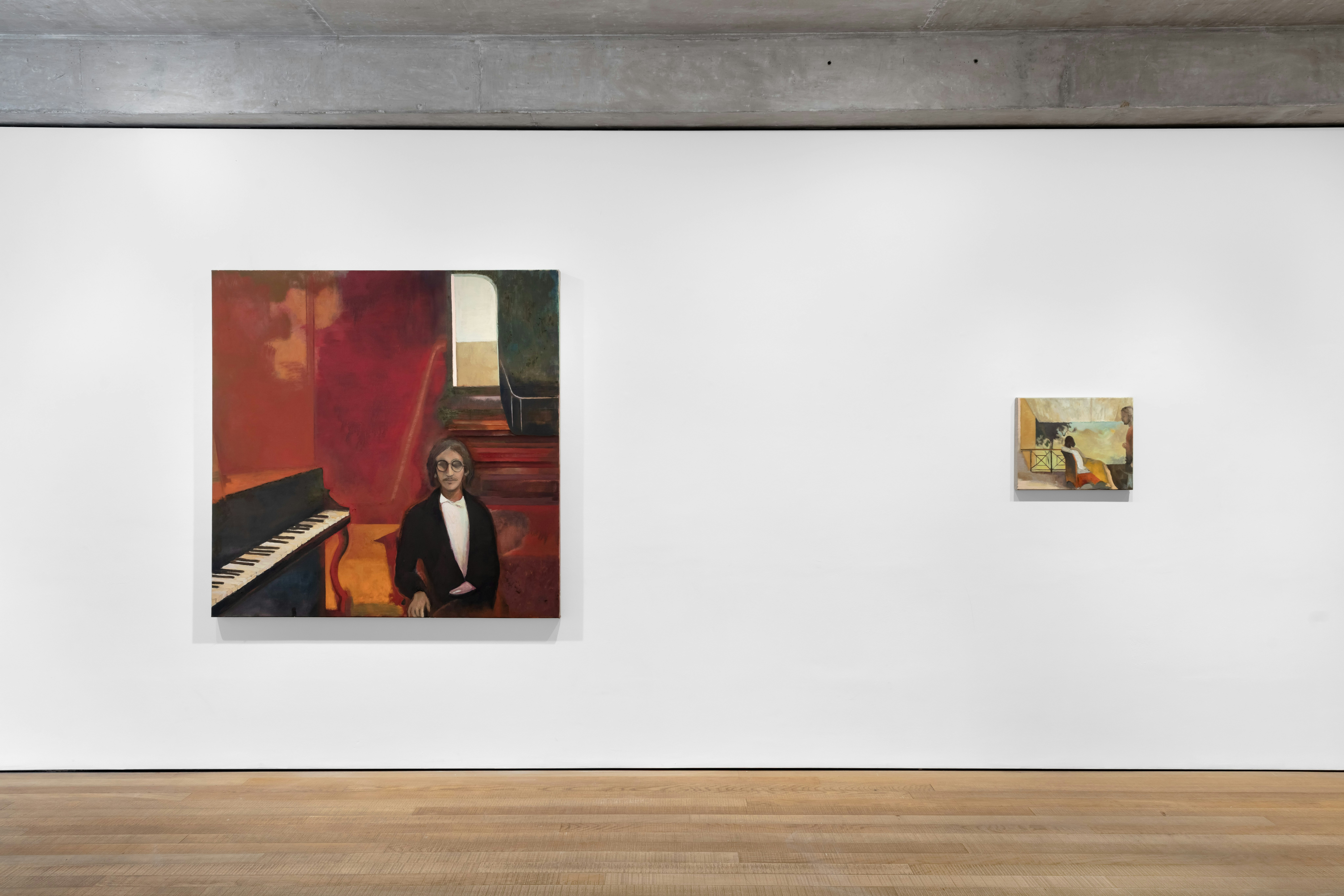
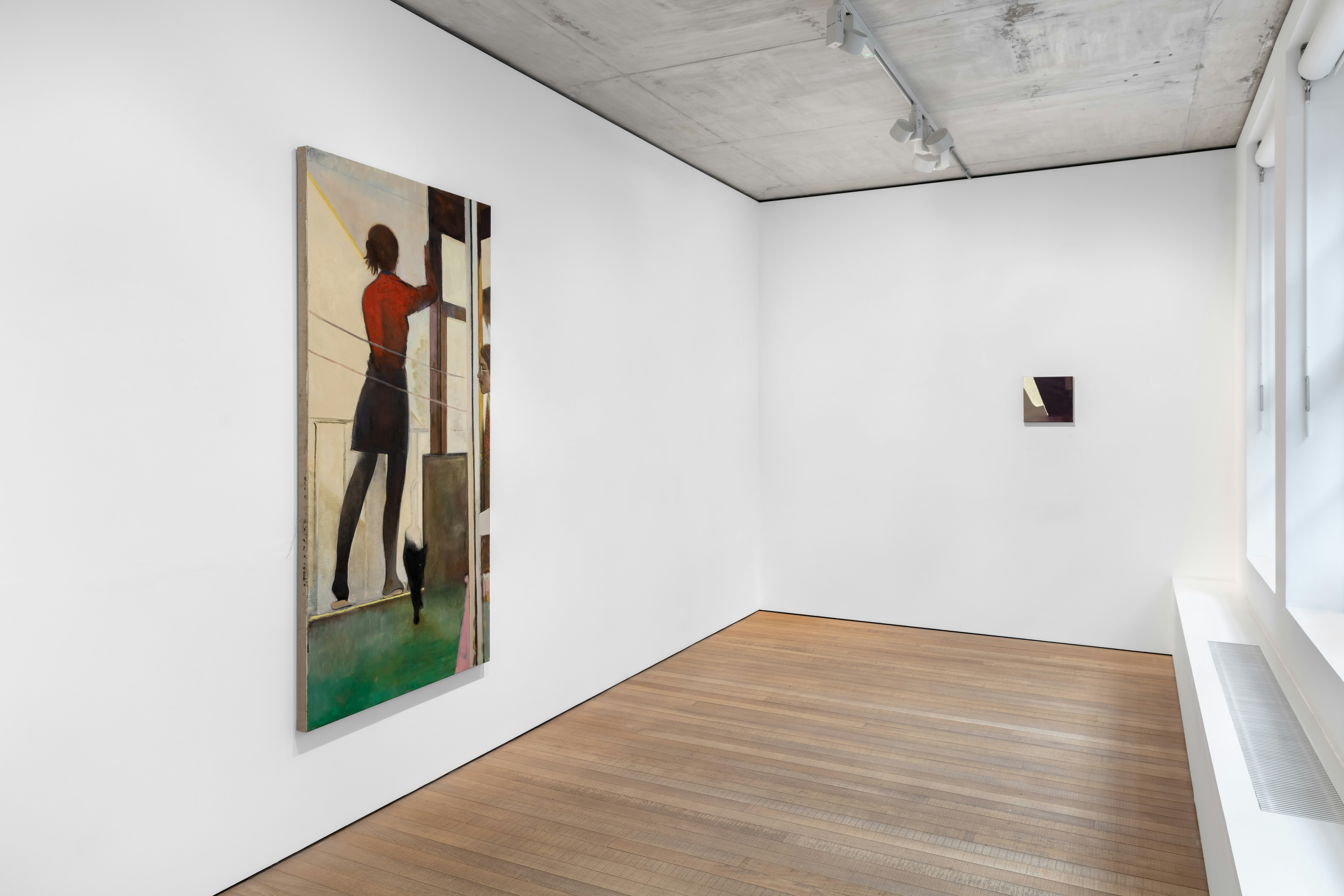
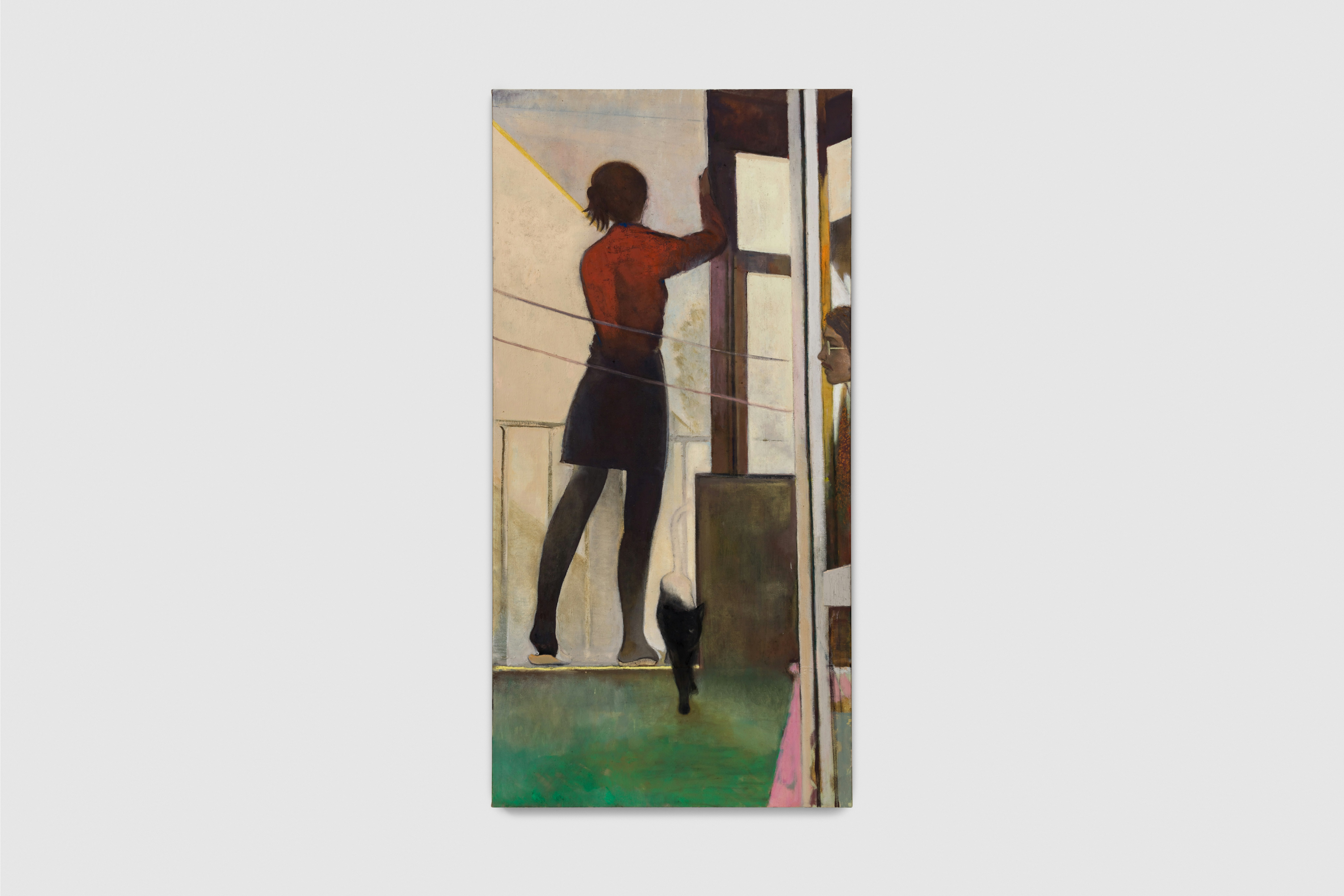
Inspired by the works of filmmakers such as Robert Bresson, Federico Fellini, and Jean-Luc Godard, as well as the Italian Renaissance painter Piero della Francesco, De Verteuil’s protagonists often reckon with thresholds and inside/outside propositions. In Patio (Fever) (2025), a woman wearing a dress is seated on a chair, legs crossed, face obscured from the viewer, feelings and emotions unintelligible. She looks out into the vast beyond of greenery and mountainous or hilly terrain. One can infer that this location is tropical; another proposition is that it is humid, sticky; the time of day, uncertain. In the far right corner, a man stands, just in view, on the edge of the matter. The left is for us to guess, for us to fill in the blanks: who are they to each other? Does she know he is there? He must certainly be able to see her. But maybe not: perspective is played with; it’s difficult to place ourselves. Will he approach her after the fact? It is a painting laden with the unspoken, the thing on the very tip of our tongue we cannot and, in the end, do not express. In Residence 3 in 1 (2025), viewers see a woman, again with her face obscured, standing to close what appears to be a door or a large window. A black cat passes by her feet towards us, and again, a man appears at the very edge of the frame: facing sideways, gaze averted, intentions and motivations unclear to us on the other side of it all. Nothing here is quite what it seems. The painting’s uncanniness renders this a puzzle to be pored over, a work to study.
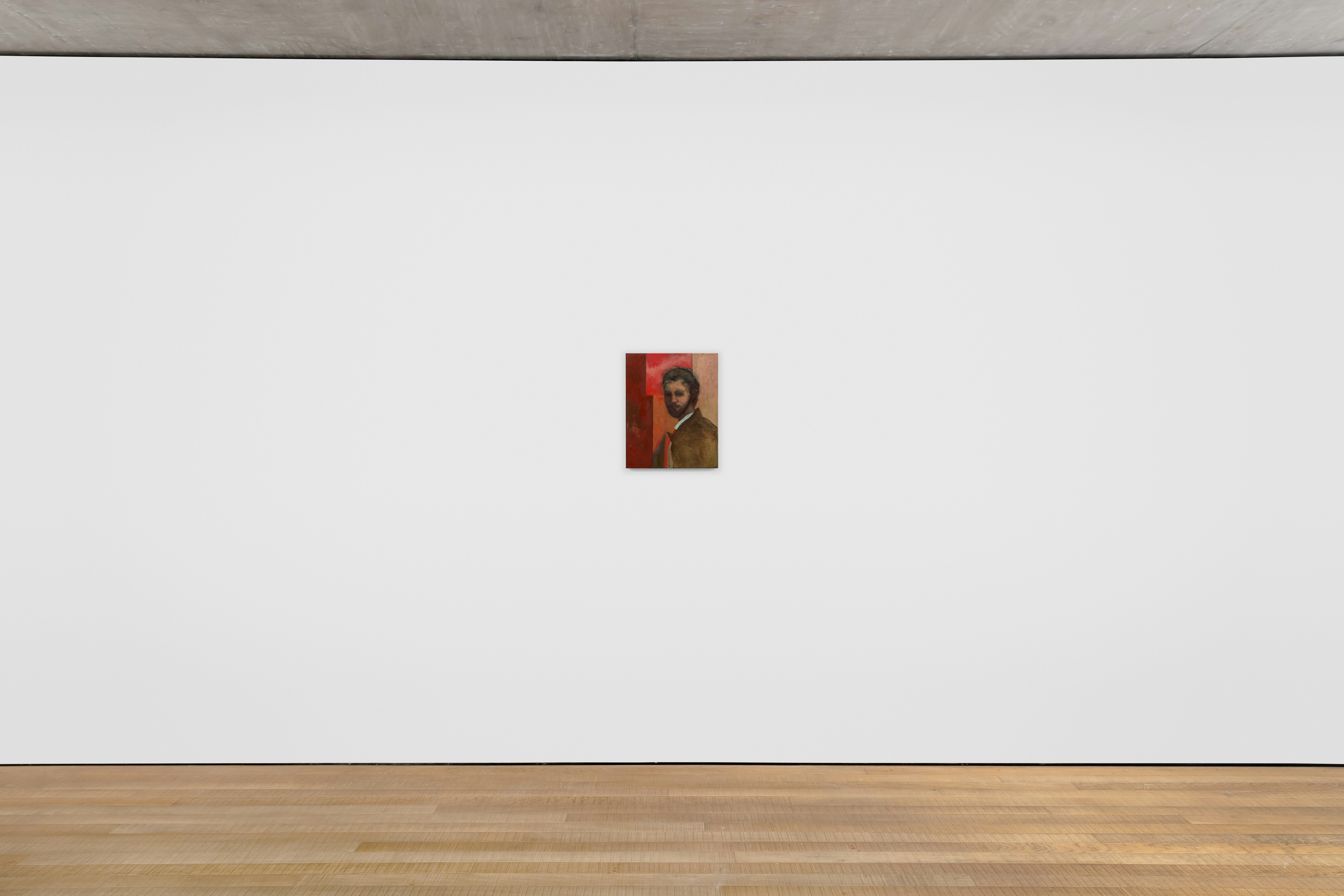
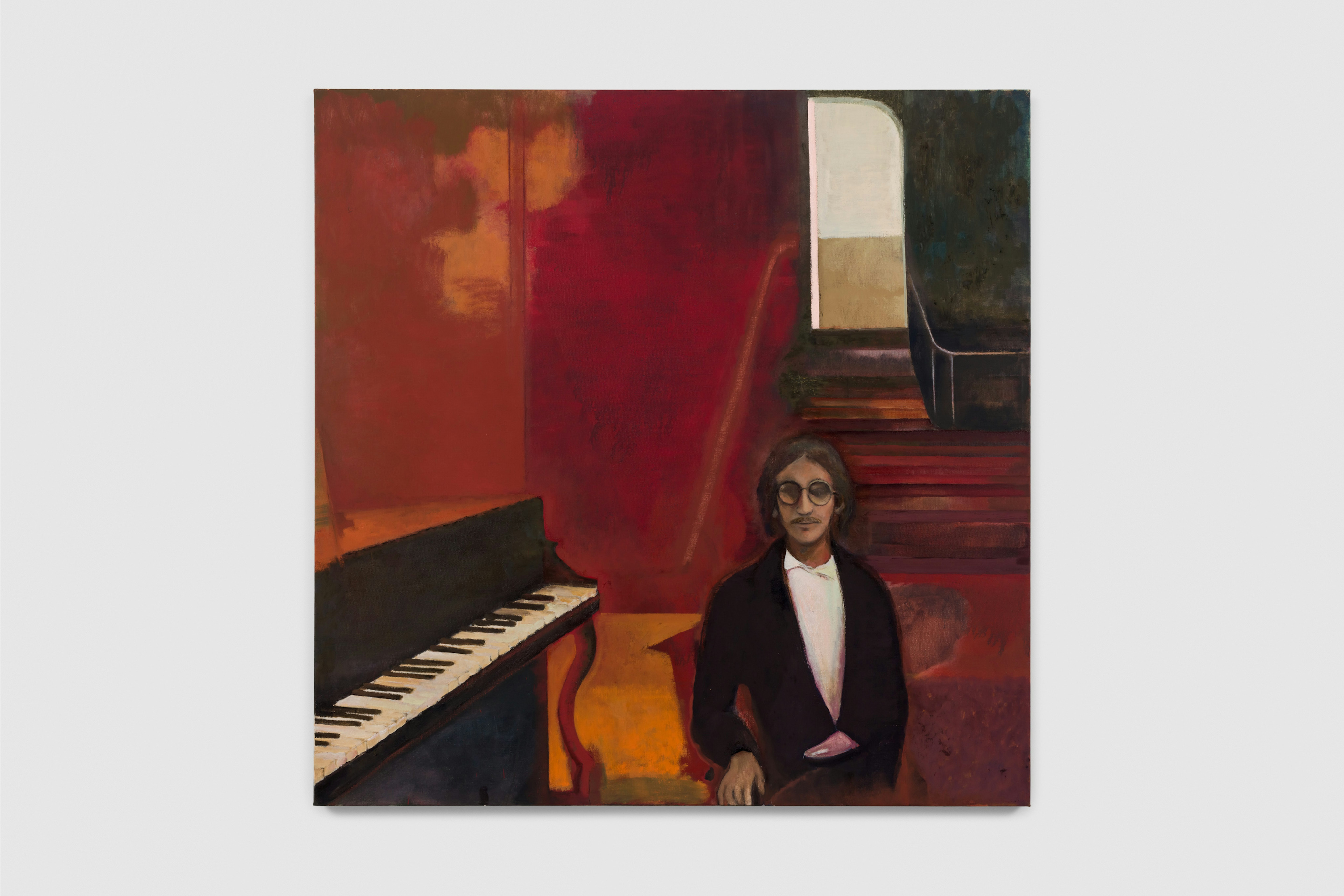
A fascination for De Verteuil is the relationship between the limits of language and what a work of art can or cannot say. Midway through our conversation, De Verteuil asks me a question: how do you write about art? I could talk about ekphrasis, the rhetoric underpinning art writing and criticism, and that is what I do. Yet, can words ever faithfully describe what we see? I find myself lingering on this uncertainty. Everything is interpretation; what could be felt, seen or implied. In these works, De Verteuil deploys withdrawal as a strategy, a canny mode of revealing everything and very little about oneself simultaneously . ‘If Not Dread Delight’ enjoys its dance with this sense of concealment. What you think you know is not really what it is at all. But there is no right, and there is no wrong.
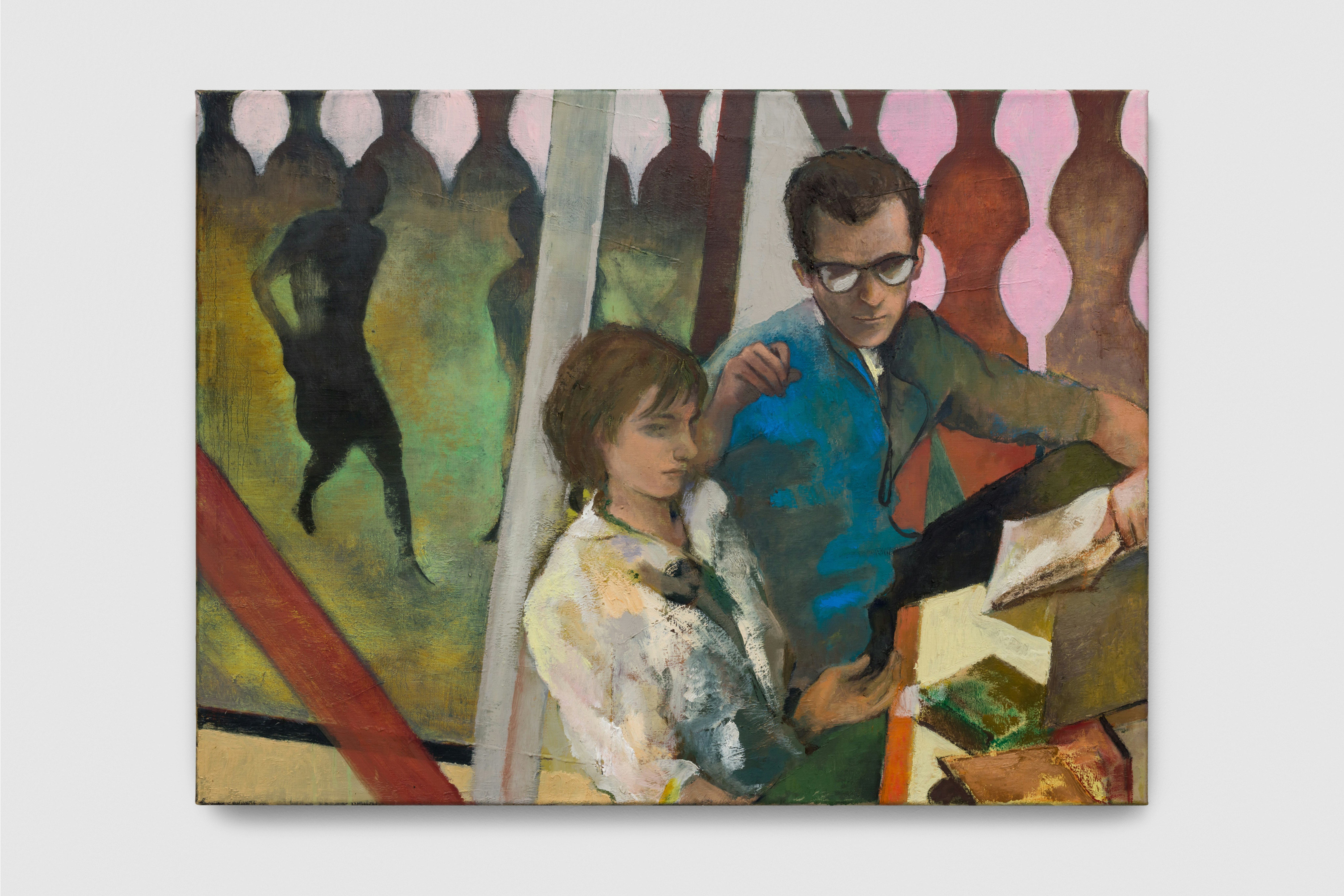
In Telefon Talk (2025), a man and a woman sit together, in front of them are a myriad assortment of books. The recurring brown hair, the recurring glasses. Here, the two figures appear to be conspiratorial, a discussion only they are privy to. The perspective means we almost hover above them, and outside, two shadowed figures lurk behind. What question hangs between them, unspoken yet charged? No more clues are offered, but in de Verteuil’s hand, this is enough. More than enough. Partway through our conversation, he told me that he wants viewers to fall between the gap of the painting and themselves. The interiors are at once comforting and claustrophobic; the outside simultaneously offers possibility and danger.
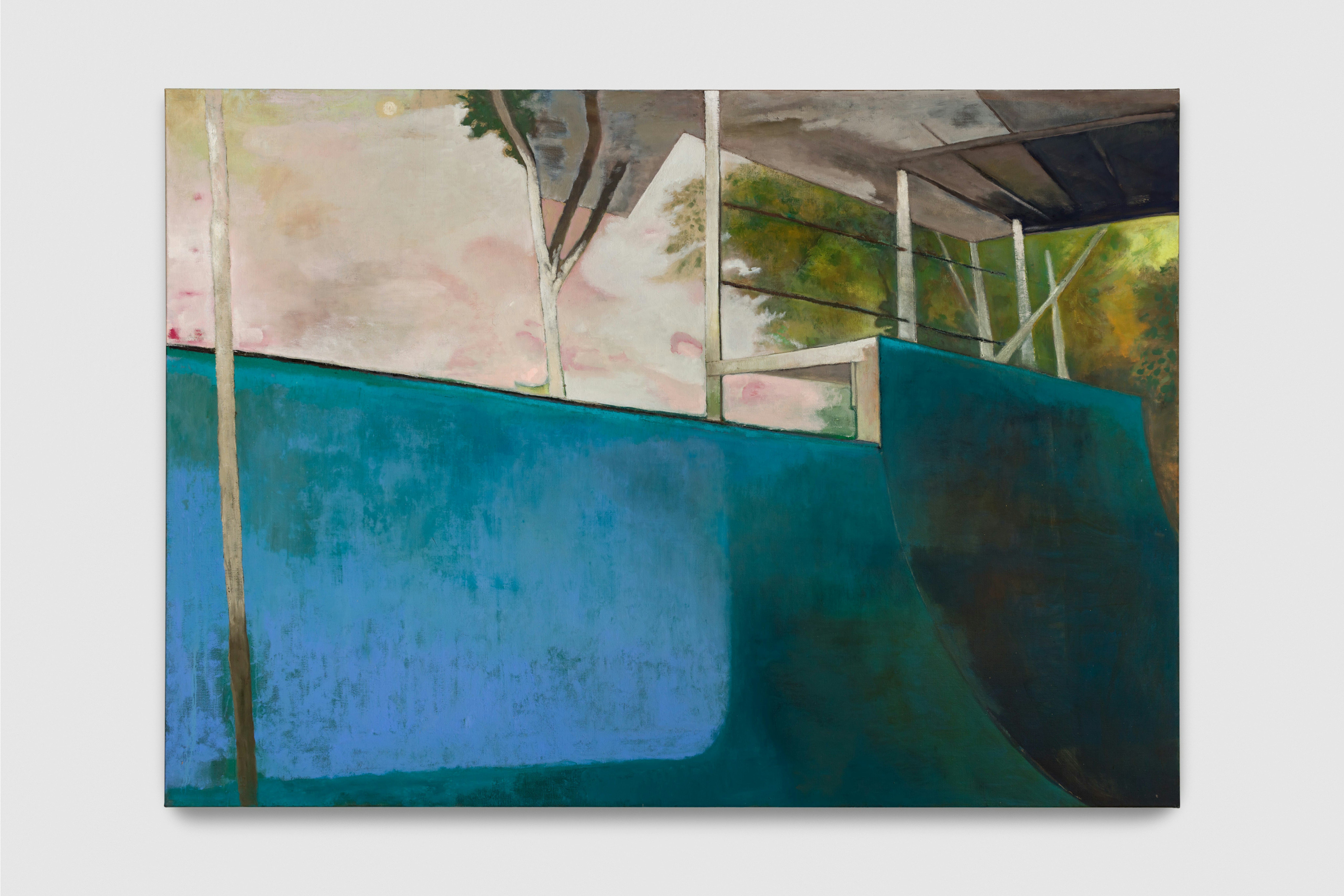
The eight works in ‘If Not Dread Delight’ contain a filmic quality, similar to renderings of life in the cinema of filmmakers such as Mia Hansen-Løve’s, a master of depicting the quotidian quandaries of love, loss, memory, ageing, mortality. Domesticity and the shape of our lives bring these paintings together. De Verteuil spoke to me about the Hollywood cinema he grew up watching, hamfisted in their resolution to ensure the audience members leave the screen satisfied, with succinct, happy endings, and the more realist narratives of ruptures he later was drawn towards, of situations never clearly defined or fully resolved. Another day passes, and another one, and another one. It all unfolds and unravels, slowly but surely. That is the way of this life, and the lives glimpsed in ‘If Not Dread Delight’.
–Vanessa Peterson